
Tennis elbow, also called lateral elbow pain or lateral epicondylalgia, can cause pain over the outer elbow and may be aggravated by lifting, gripping or repeated wrist and forearm use. Physiotherapy may combine assessment, education, graded exercise and selected manual techniques without promising a particular outcome.
Tennis elbow, also called lateral elbow pain or lateral epicondylalgia, can cause pain over the outer elbow and may be aggravated by lifting, gripping or repeated wrist and forearm use.[1][2] Physiotherapy may combine assessment, education, graded exercise and selected manual techniques without promising a particular outcome.[3]
What should you know about tennis elbow?
Tennis elbow is a painful condition involving the tissues around the outside of the elbow. Symptoms may include tenderness, forearm pain, stiffness, weakness with gripping or lifting, and difficulty fully straightening the elbow; playing tennis is not required.[1][2]
What can contribute to tennis elbow?
Repetitive gripping, lifting, twisting or wrist movements can contribute to tennis elbow, and it may also follow an elbow injury.[1][2] Computer work, manual tasks, tools, music and sport are examples of activities that may aggravate symptoms, but an activity alone does not confirm the diagnosis.[1]
What does a first physiotherapy assessment look at?
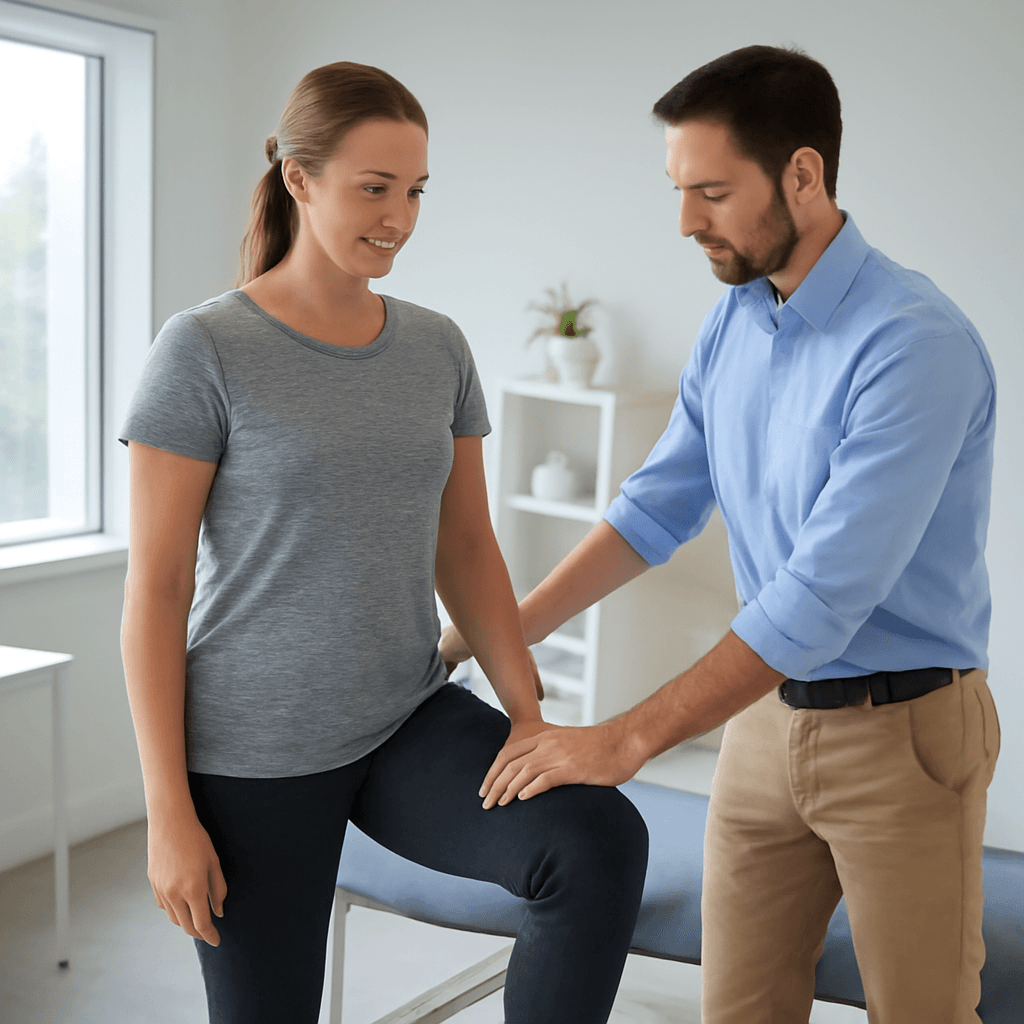
A physiotherapy assessment may ask about the onset of pain, aggravating tasks, work or sport demands and how the arm is functioning. It may examine elbow and wrist movement, tenderness, grip-related loading and nearby regions when appropriate, then use the findings to guide a gradual plan; persistent or atypical symptoms may need medical review.[1][2]
How may physiotherapy help with tennis elbow?
At Next Step Physio & Rehab Clinic, physiotherapy starts with an assessment. Depending on your findings, care may include:
- Education may cover temporary activity modification, pacing, lifting or gripping strategies and ways to reduce repeated forearm strain while maintaining useful activity.[1][2]
- A graded programme for wrist, forearm and elbow mobility and strengthening may be prescribed, with load adjusted to symptoms and function.[1][2]
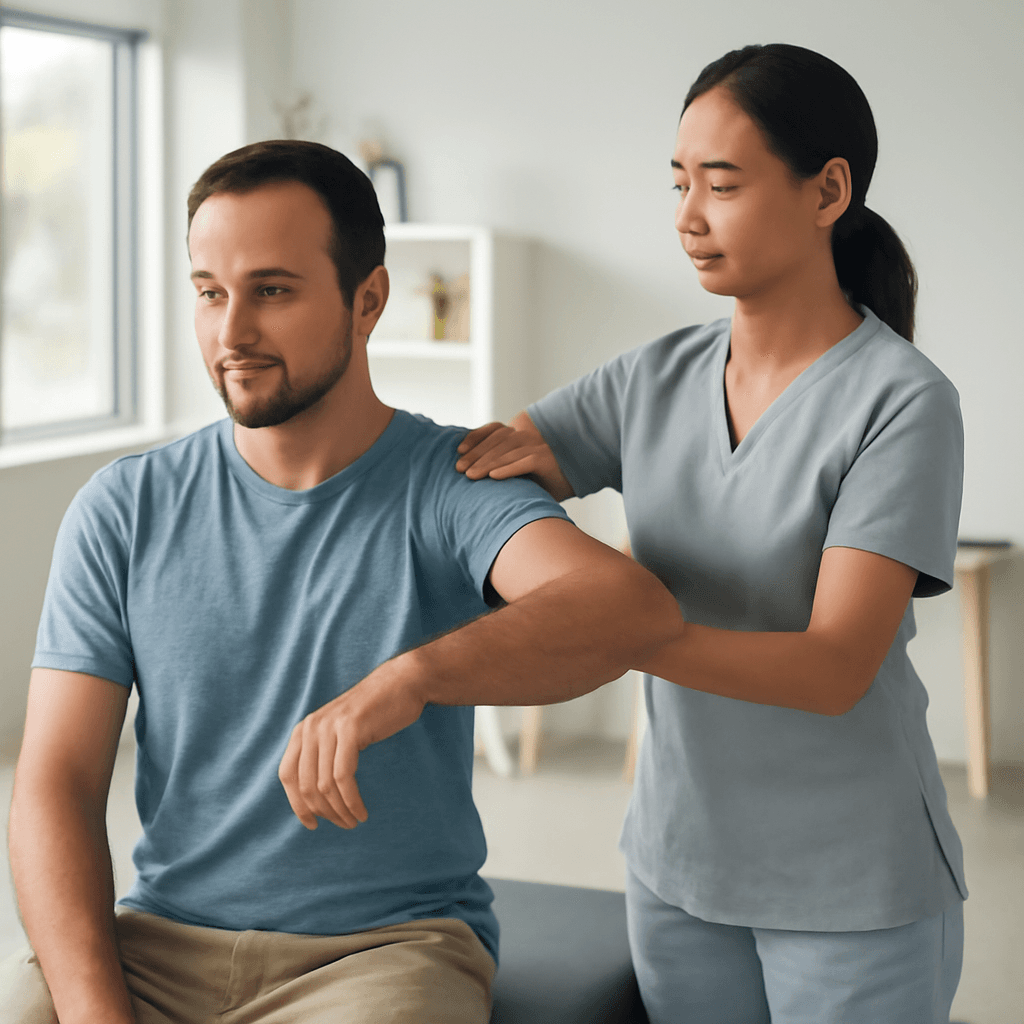
- Manual therapy, such as therapist-guided movement of a joint or muscle, may be considered alongside exercise; low-certainty evidence means benefits may be small or not sustained.[3]
- Massage or other soft-tissue techniques may be considered as an adjunct when clinically appropriate, rather than as a stand-alone promise of recovery.[3]
- Return-to-work, sport or household activity planning may use temporary modifications and gradual loading as tolerance changes.[2]
See our physiotherapy service page for more about how we work.
Self-care and everyday guidance
- Reduce or modify activities that clearly worsen symptoms, while avoiding unnecessary complete rest; lighter tools, larger grips and regular breaks may reduce forearm loading.[1][2]
- Gentle elbow and wrist movement may help limit stiffness, and strengthening should be introduced gradually rather than pushed through a marked increase in pain or swelling.[1][2]
- A wrapped hot or cold pack may be tried for short periods if it is safe for your skin and circulation; stop if there is severe redness, blistering or increased swelling.[1][2]
- Ask a pharmacist or physician about pain medicines or topical products that may be appropriate for you, and do not stop prescribed medication without medical advice.[1]
When to seek urgent or medical care
- Arrange medical assessment if elbow pain remains after at least two weeks of rest or self-care, or if it is worsening or limiting normal use.[1][2]
- Stop an exercise and seek clinical advice if it causes a significant increase in pain or swelling.[2]
- Seek assessment for numbness, weakness or symptoms spreading down the arm rather than assuming they are tennis elbow.[2]
- After a significant injury, seek medical assessment for severe pain, marked swelling, deformity or major loss of movement rather than beginning a home programme.[1]
Frequently asked questions
Do I need to play tennis to have tennis elbow?
No. Repeated gripping, lifting, twisting and wrist use in work, household tasks, computer use, music or other activities may contribute.[1]
What might physiotherapy for tennis elbow include?
It may include an assessment of movement and loading, education, activity modification, graded wrist and forearm strengthening, and manual therapy or massage as an adjunct. The plan should be adjusted to your response and goals.[1][3]
When should I seek help for elbow pain?
Consider assessment if self-care has not helped after about two weeks, if pain is worsening, or if you develop swelling, numbness, weakness or symptoms extending down the arm.[1][2]
Book an assessment in Brampton
Next Step Physio & Rehab Clinic is at 9886 Torbram Rd Unit 109, Brampton, ON L6S 3L9. We are open Monday to Friday 11 AM to 7 PM and Saturday 10 AM to 2 PM, and direct billing is available with many insurers. No doctor's referral is needed to book physiotherapy.
Request an appointment or call +1 (647) 872-8105.
This article is general education and not medical advice, diagnosis or treatment. Everyone's situation is different. Speak with a qualified healthcare professional about your own symptoms, and seek emergency care for severe or sudden symptoms.
Sources
This article is for general education only and is not a substitute for individual medical advice. Please speak with a qualified healthcare professional about your situation.