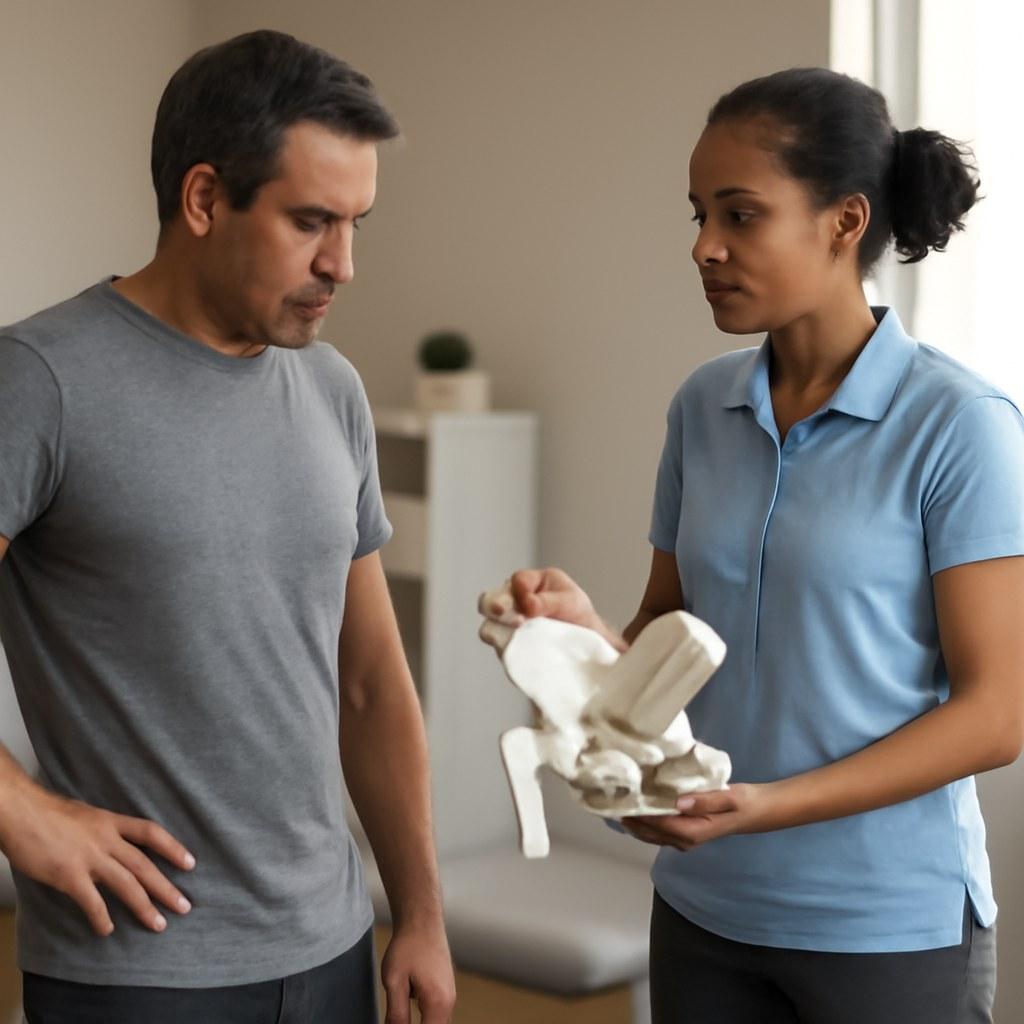
Hip Osteoarthritis Physiotherapy in Brampton: What to Expect

Hip osteoarthritis physiotherapy in Brampton may include an assessment of movement, strength and daily activities, followed by an individual plan for exercise and activity changes. Learn what to expect without promises of a fixed result.
Hip osteoarthritis physiotherapy in Brampton may help you understand what is contributing to hip pain and stiffness, then build a plan around the activities you want to keep doing. An assessment may include your symptoms, walking, hip movement, strength and daily demands. This article cannot diagnose the cause of your pain or predict your recovery.
Published by Next Step Physio & Rehab Clinic · Published November 22, 2026
What is hip osteoarthritis?
Hip osteoarthritis is a joint condition that can cause pain, stiffness and difficulty with activities such as walking, bending or putting on socks. Symptoms may be felt in the groin, buttock, side of the hip or sometimes down the thigh. Similar symptoms can come from other hip, back or soft-tissue problems, so pain alone does not confirm osteoarthritis. A clinician may consider your history and physical examination, and imaging is sometimes used when it adds useful information. https://www.rnoh.nhs.uk/patients-and-visitors/patient-information-guides/patients-guide-hip-osteoarthritis
What should you expect from a hip physiotherapy assessment?
A first visit may cover when your symptoms began, what makes them easier or worse, sleep, walking, stairs, work, exercise and your goals. Your physiotherapist may assess hip movement, strength, walking and functional tasks that matter to you. The plan should reflect your health history, preferences and current abilities rather than a fixed checklist. The Royal National Orthopaedic Hospital notes that hip osteoarthritis is commonly assessed through symptoms and physical examination, with imaging used in some situations. https://www.rnoh.nhs.uk/patients-and-visitors/patient-information-guides/patients-guide-hip-osteoarthritis
How might physiotherapy support hip osteoarthritis?
Depending on the assessment, a plan may include education, activity changes, exercises for strength and movement, walking or balance practice, and progress reviews. Current guideline reviews consistently place education and exercise among the main first-line approaches for hip and knee osteoarthritis, while stressing that care should be individualised. https://pubmed.ncbi.nlm.nih.gov/37394226/
Exercise does not have to mean pushing through severe pain or copying a routine from the internet. A physiotherapist may start with a manageable version of a movement, explain how to monitor your response and adjust the load over time. Education and exercise are recommended within a broader plan that considers your needs, preferences and circumstances. https://www.nice.org.uk/guidance/ng226
What activities can you discuss at an appointment?
Bring the activities that are actually difficult: walking to the car, climbing stairs, getting in and out of a chair, shopping, gardening or sleeping. It can help to note how far you can walk, whether symptoms change during the day and what you have already tried. A clinician may discuss pacing, temporary changes to aggravating tasks, a walking aid or exercises that fit your current tolerance. Do not start using a cane or change medication based only on this article.
When should hip pain be assessed promptly?
Seek prompt medical advice after a significant fall or injury, if you cannot bear weight, or if the hip is hot and swollen with fever or you feel acutely unwell. New or rapidly worsening symptoms, unexplained weight loss, severe night pain or changes in bladder or bowel control also need medical assessment rather than a routine exercise plan. If you think you have an emergency, call 911 or visit the nearest emergency department.
Frequently asked questions
Can physiotherapy diagnose hip osteoarthritis?
A physiotherapist can assess your symptoms, movement and function and discuss whether physiotherapy is appropriate. Other healthcare professionals or imaging may be needed depending on the presentation. An online article cannot diagnose hip osteoarthritis.
Will I need to stop walking or exercising?
Not necessarily. Depending on the assessment, your plan may adjust distance, pace, hills or other loads rather than stopping all movement. The right change depends on your symptoms, goals and response.
How long does hip osteoarthritis physiotherapy take to work?
There is no reliable single timeline for everyone. Your symptoms, activity demands, health factors and response to a gradual plan can affect how care is adjusted. Be cautious about promises of a guaranteed result or fixed number of visits.
Discuss hip osteoarthritis physiotherapy in Brampton
Next Step Physio & Rehab Clinic is at 9886 Torbram Rd, Unit 109, Brampton, ON L6S 3L9, Canada. Review the clinic's physiotherapy service in Brampton, request an appointment online or contact the clinic. Call +1 (647) 872-8105.
Educational information only; this article is not an individual diagnosis or treatment plan. Speak with a qualified healthcare professional about your symptoms. Seek urgent medical care for severe, rapidly worsening or emergency symptoms.
Sources
This article is for general education only and is not a substitute for individual medical advice. Please speak with a qualified healthcare professional about your situation.